
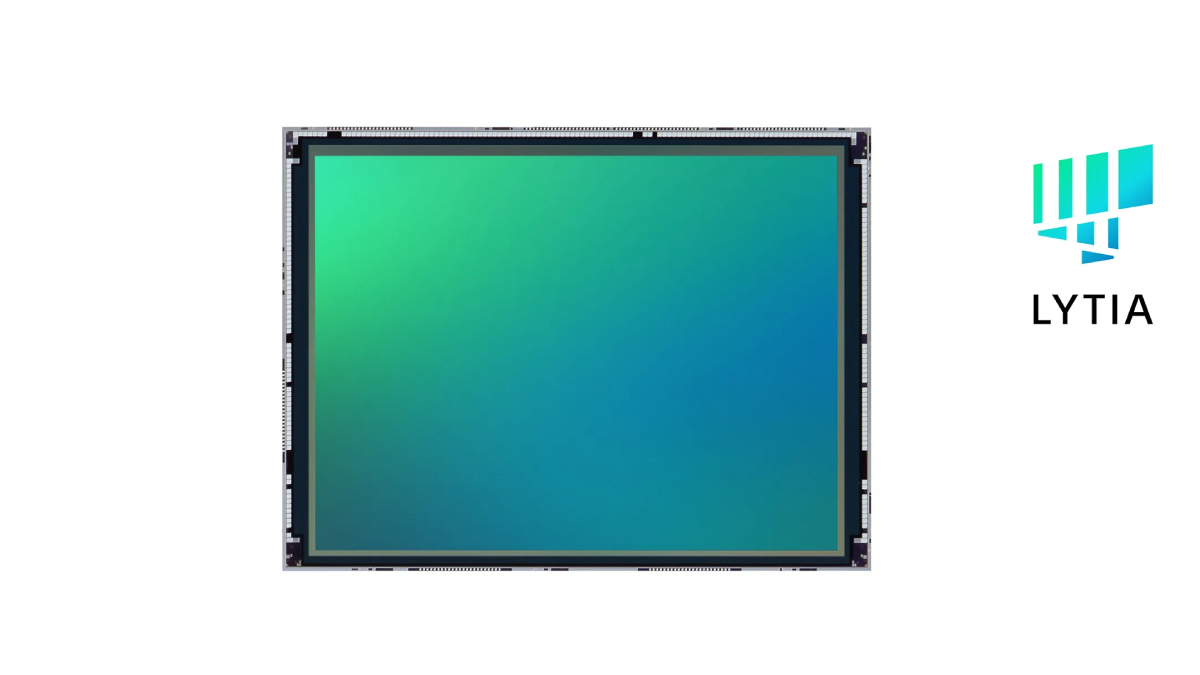
Sony Semiconductor Solutions Corporation has unveiled its first 200-megapixel image sensor for smartphones, the LYTIA 901. The new sensor boasts a large-format design and uses 0.7-micron pixels.
Key Features of Sony LYTIA 901
The LYTIA 901 features Quad-Quad Bayer Coding layout, where 16 pixels of the same colour are grouped. This structure enables high-resolution detail capture while maintaining strong light sensitivity.
- This arrangement behaves like a single larger pixel during regular photography, helping in low-light conditions.
- When zooming, the sensor uses remosaicing to restore normal pixel arrangement and recover fine details.
AI-Based Remosaicing Circuit in Sony LYTIA 901 200-Megapixel Image Sensor
Sony has integrated an AI-based remosaicing circuit directly inside the sensor. This is a first for mobile CMOS sensors, according to the company.
- The AI processing helps reconstruct difficult high-frequency details such as small patterns and text.
- This logic enables rapid processing and supports up to 30 frames per second video capture at 4x zoom in 4K resolution.
Dynamic Range Technologies
For dynamic range, the LYTIA 901 uses several HDR systems. These include:
- Dual Conversion Gain HDR to read the sensor at different gain levels within a single frame.
- Fine12bit ADC to increase bit depth used during conversion.
- Hybrid Frame HDR, which blends short-exposure frames with DCG data.
Together, these technologies achieve a dynamic range of more than 100dB, retaining detail in both bright highlights and deep shadows.
Sony LYTIA 901 Specs and Features
The Sony LYTIA 901 offers:
- A maximum output of approximately 200 effective megapixels.
- Multiple pixel-binned modes such as 50-megapixel and 12.5-megapixel output.
- Support for high-frame-rate 4K recording.
- All-pixel autofocus and a range of hardware zoom levels up to 4x in-sensor zoom.
Future Applications and Partnerships
The LYTIA 901 is designed to improve low-light performance, enhance tonal accuracy, and deliver cleaner image data for mobile processors to handle.
Reported use-case examples include stage and concert photography, where distant subjects and mixed lighting often create difficulties for current sensors.
Sony has not confirmed specific partner devices but has stated that the sensor is already shipping to manufacturers. Industry reports suggest that the Oppo Find X9 Ultra and Vivo X300 Ultra may be among the first smartphones to adopt the new LYTIA 901 when they launch in 2026.
Conclusion
The LYTIA 901 represents a significant step forward for Sony Semiconductor Solutions Corporation in the development of high-performance image sensors. With its advanced features and capabilities, it is poised to power next-generation flagship phones and compete with existing 200-megapixel platforms already used in the industry.